Options Mall logo

ThaneMumbai

ShirtDesign

A technical journal of the formal shirt — collars, cuffs, plackets, patterns and sleeves, drawn and explained.

Journal DS-01 / Six chapters / Men's formal shirts

CHEST BODY LENGTH SHOULDER BARREL CUFF YOKE (REAR)
Fig. DS-01 — Formal shirt, front elevationNot to scale
Chapter 01

Collars

The collar is the most expressive part of a formal shirt. It frames the face, supports a tie and remains visible whether you wear a jacket or not. Collars are distinguished by their spread — the distance between the collar points — and by the length and shape of those points. The four collars below cover the large majority of formal shirts.

Classic collar

C-01 / Semi-spread
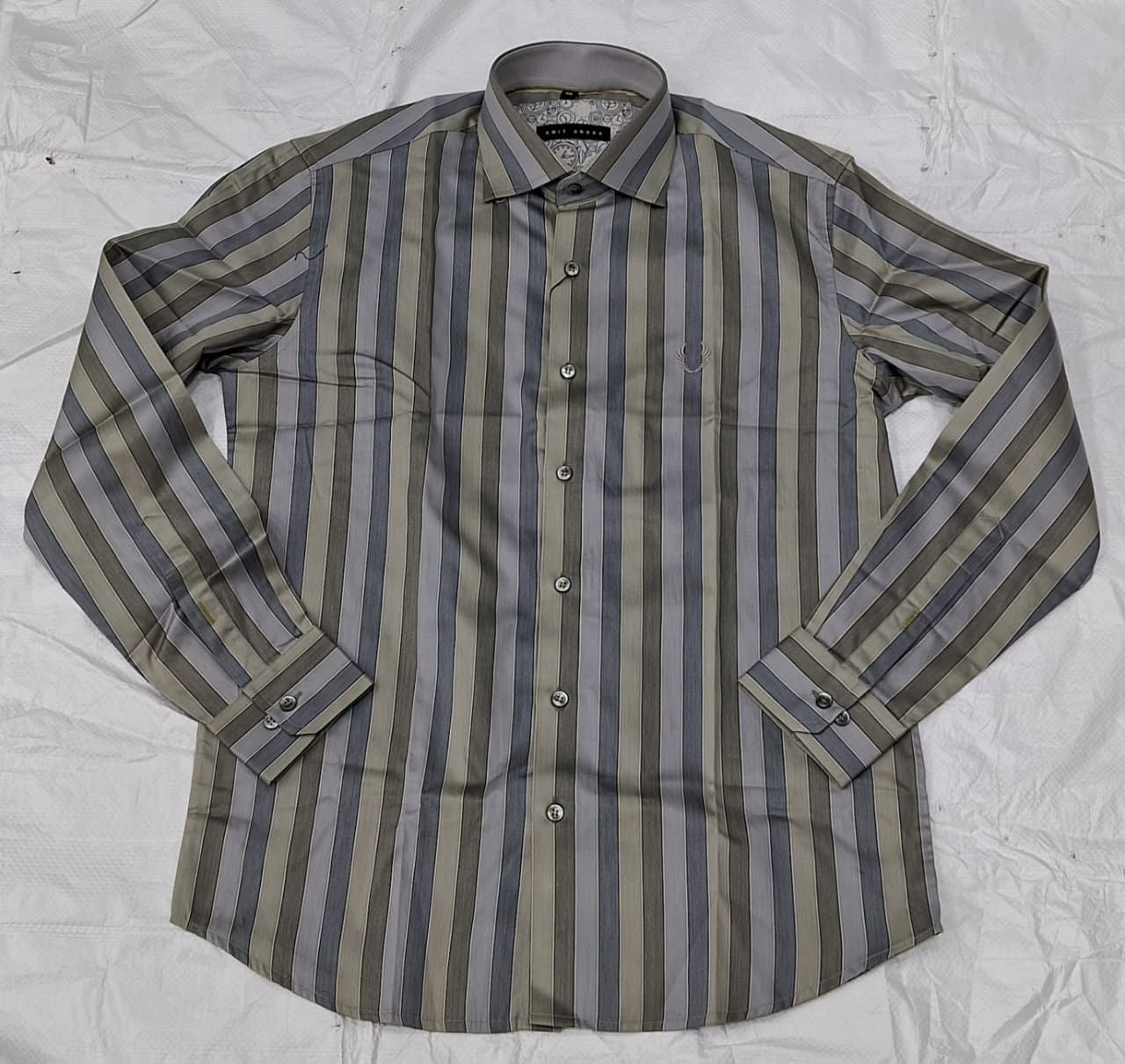
SPREAD
Striped formal shirt with a classic semi-spread collar

The classic or semi-spread collar sits between a point and a full spread. Its moderate opening accommodates most tie knots and suits nearly every face shape, which is why it appears on so many business shirts. Worn open, it keeps its shape well and looks neat under a blazer.

Tie knot
Four-in-hand or half-Windsor
Best for
Everyday business, all face shapes
Spread collar

C-02 / Wide
SPREAD
Formal shirt with a wide spread collar shown on a hanger

A spread collar opens its points wide towards the shoulders, creating a strong horizontal line. It balances longer and narrower faces, frames a fuller tie knot and looks confident worn open. The widest versions, known as cutaway collars, are a distinctly contemporary choice.

Tie knot
Half-Windsor or Windsor
Best for
Suits, formal events, narrow faces

Point collar

C-03 / Narrow
SPREAD
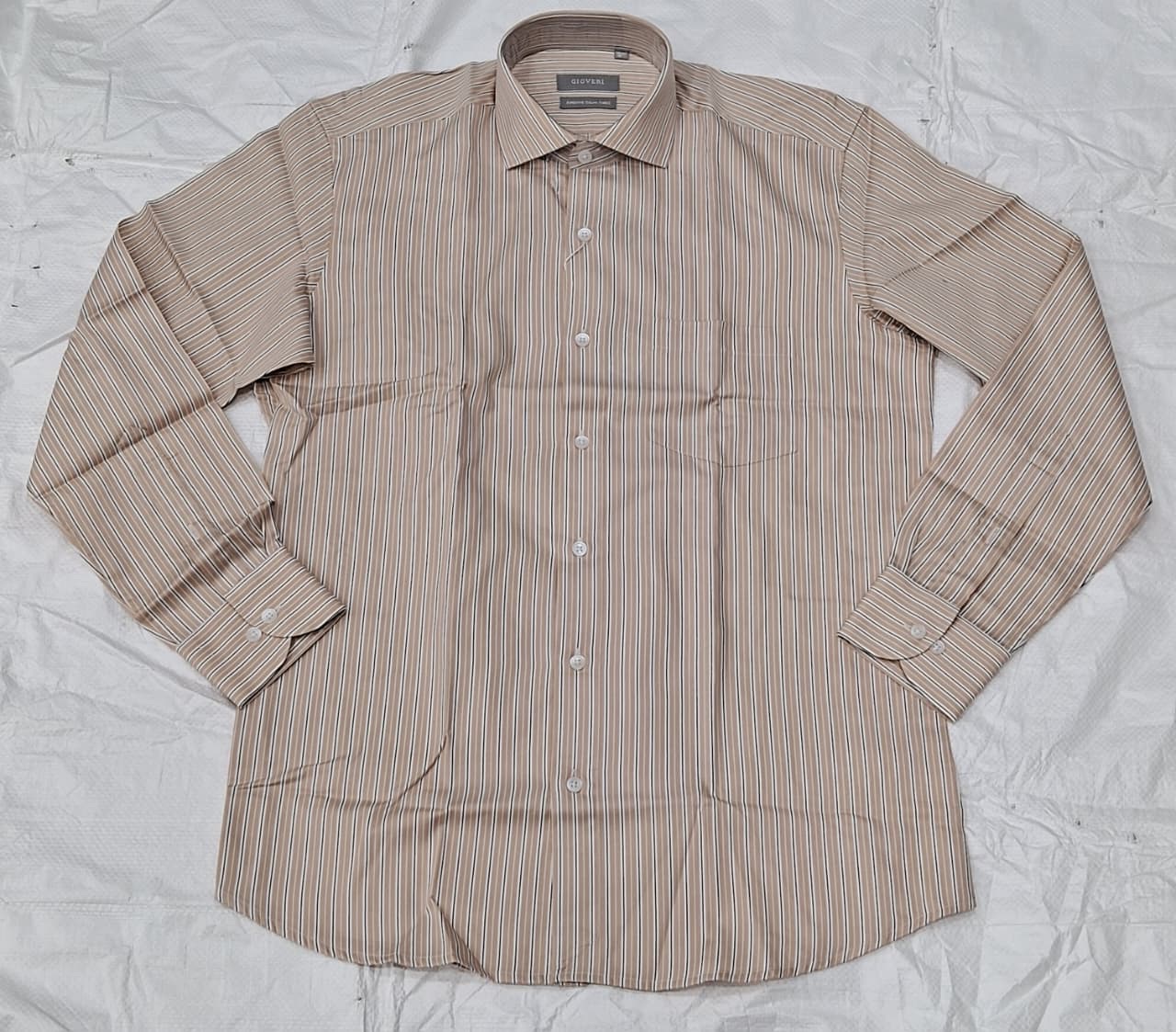
Beige striped formal shirt with a point collar

The point collar has longer points set close together, forming a narrow V. It draws the eye vertically, which can lengthen a rounder face, and it pairs best with slimmer ties and compact knots. It is a traditional, understated choice for conservative business dress.

Tie knot
Four-in-hand
Best for
Round faces, slim ties, traditional offices

Button-down collar

C-04 / Fastened
SPREAD
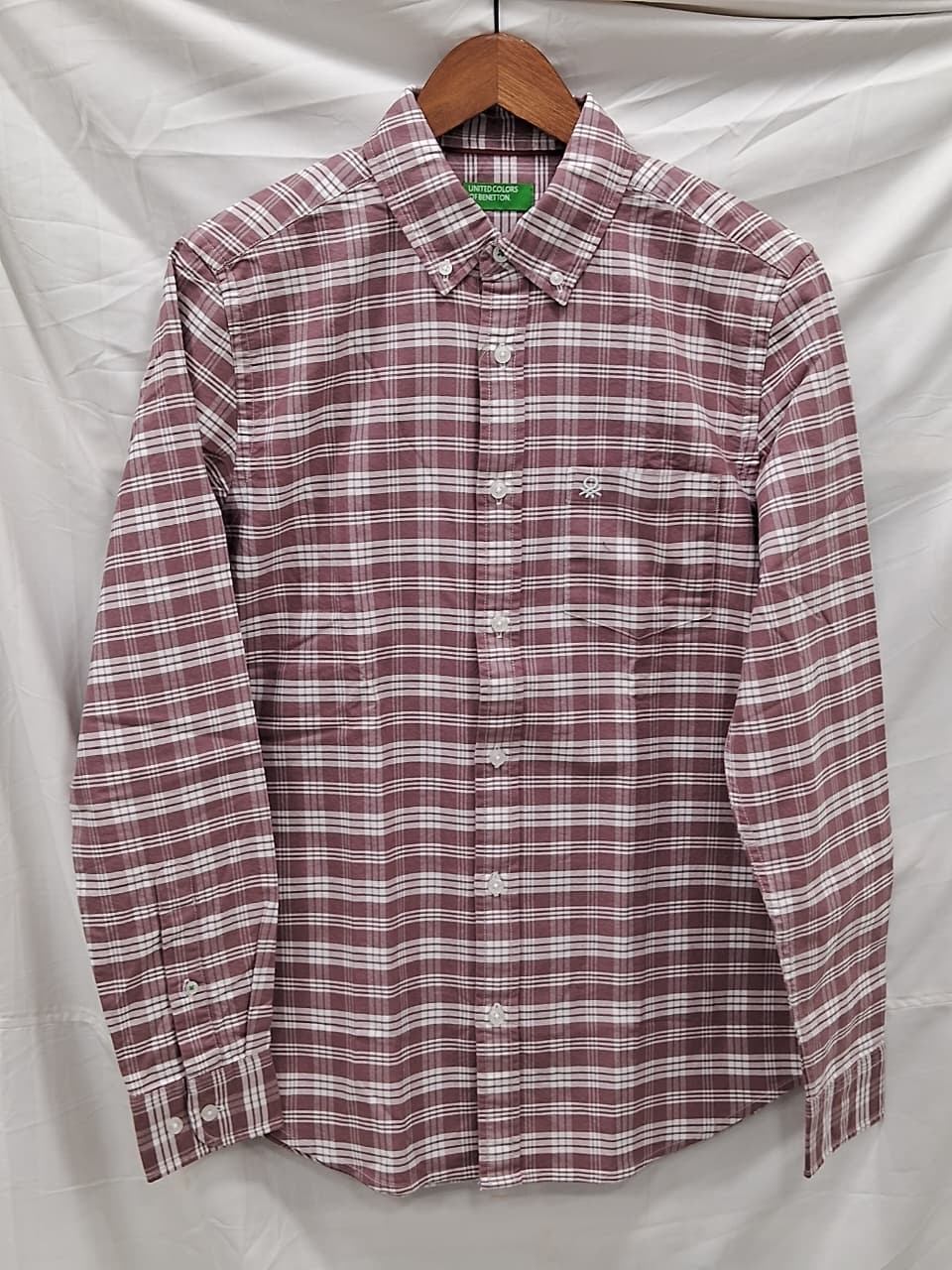
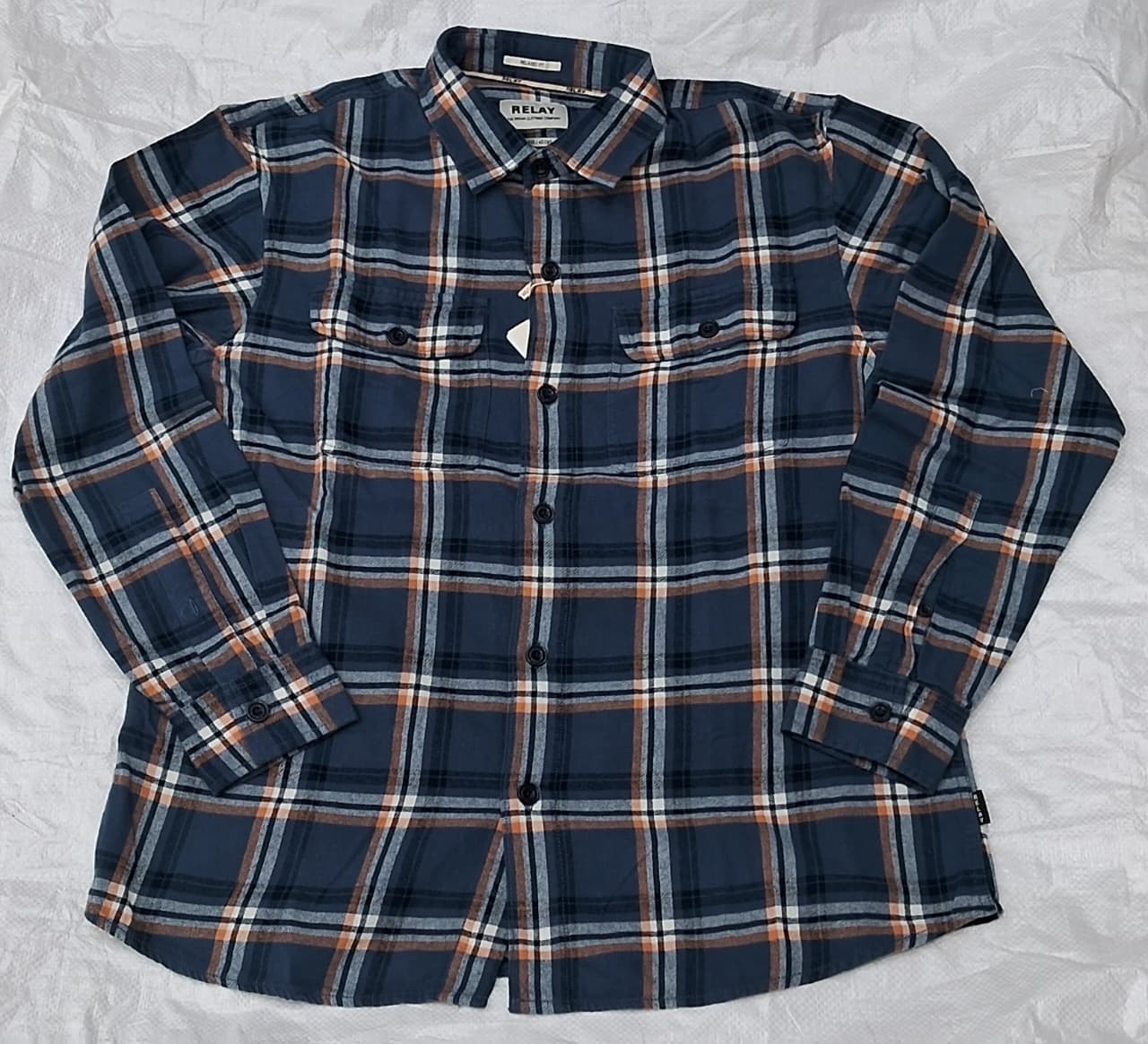
Checked shirt with a button-down collar on a hanger

The button-down collar fastens its points to the shirt front with small buttons, giving a soft roll and keeping the collar in place. Born in sport, it remains slightly less formal than other collars — ideal for business-casual days and for wearing without a tie.

Tie knot
Four-in-hand, or no tie
Best for
Smart-casual offices, travel, weekends
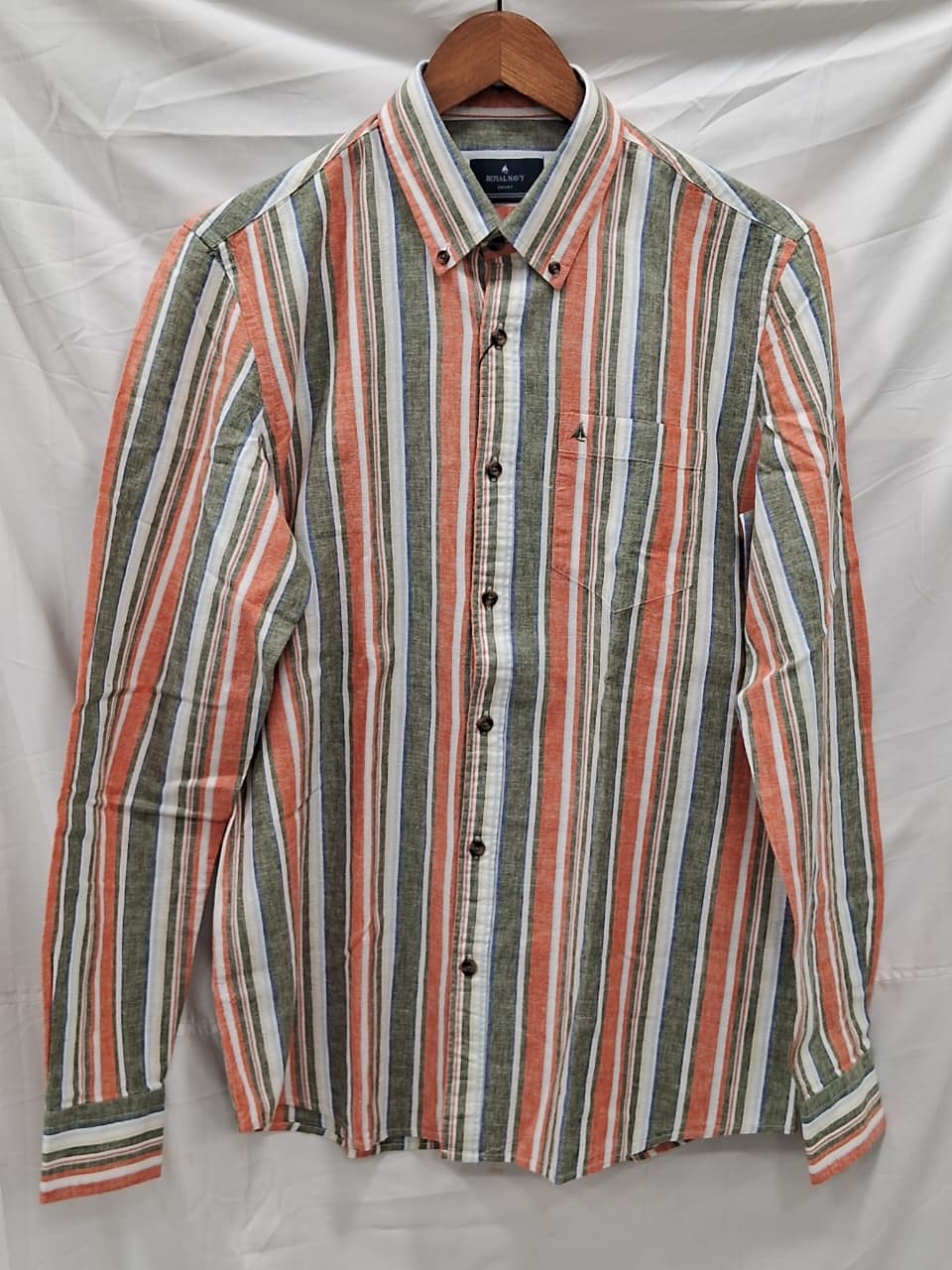
Multi-colour striped shirt with a button-down collar on a hanger
Fig. 01.5 — Button-down on a striped shirt
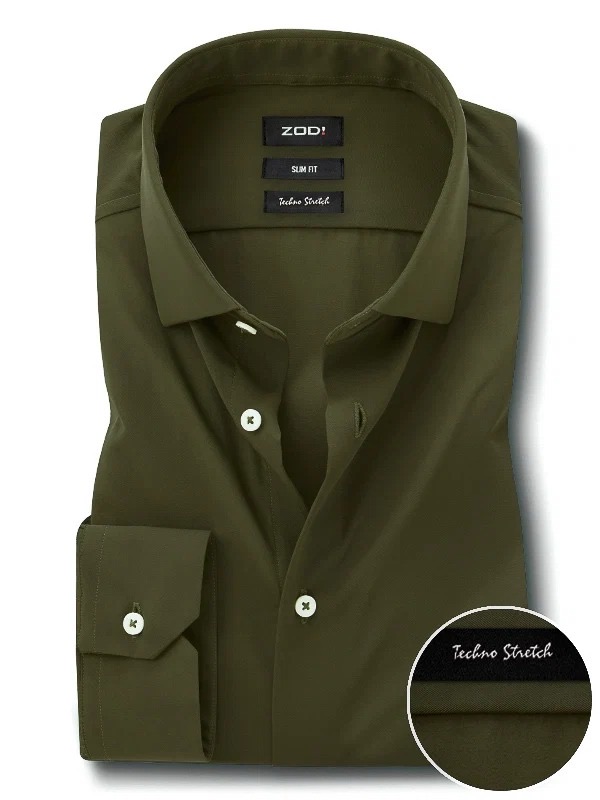
Olive formal shirt with a spread collar laid flat
Fig. 01.6 — Spread collar, worn open
Chapter 02

Cuffs

The cuff finishes the sleeve and is seen every time you reach, write or shake hands. Ideally around a centimetre of cuff shows below a jacket sleeve. The two principal formal cuffs differ in construction and formality.

CUFF DEPTH SLEEVE PLACKET

Barrel cuff

A single band of fabric fastened with one or two buttons. Rounded, square or angled corners subtly change its character. The barrel cuff is practical, comfortable and the standard for business shirts. Two buttons side by side often allow you to adjust the fit at the wrist.

FOLD LINE CUFFLINK

French cuff

A double-length cuff folded back on itself and fastened with cufflinks through four buttonholes. It is the most formal cuff, traditionally worn with suits for ceremonies, evening events and important occasions — and it offers a discreet place for personal expression through the choice of cufflink.

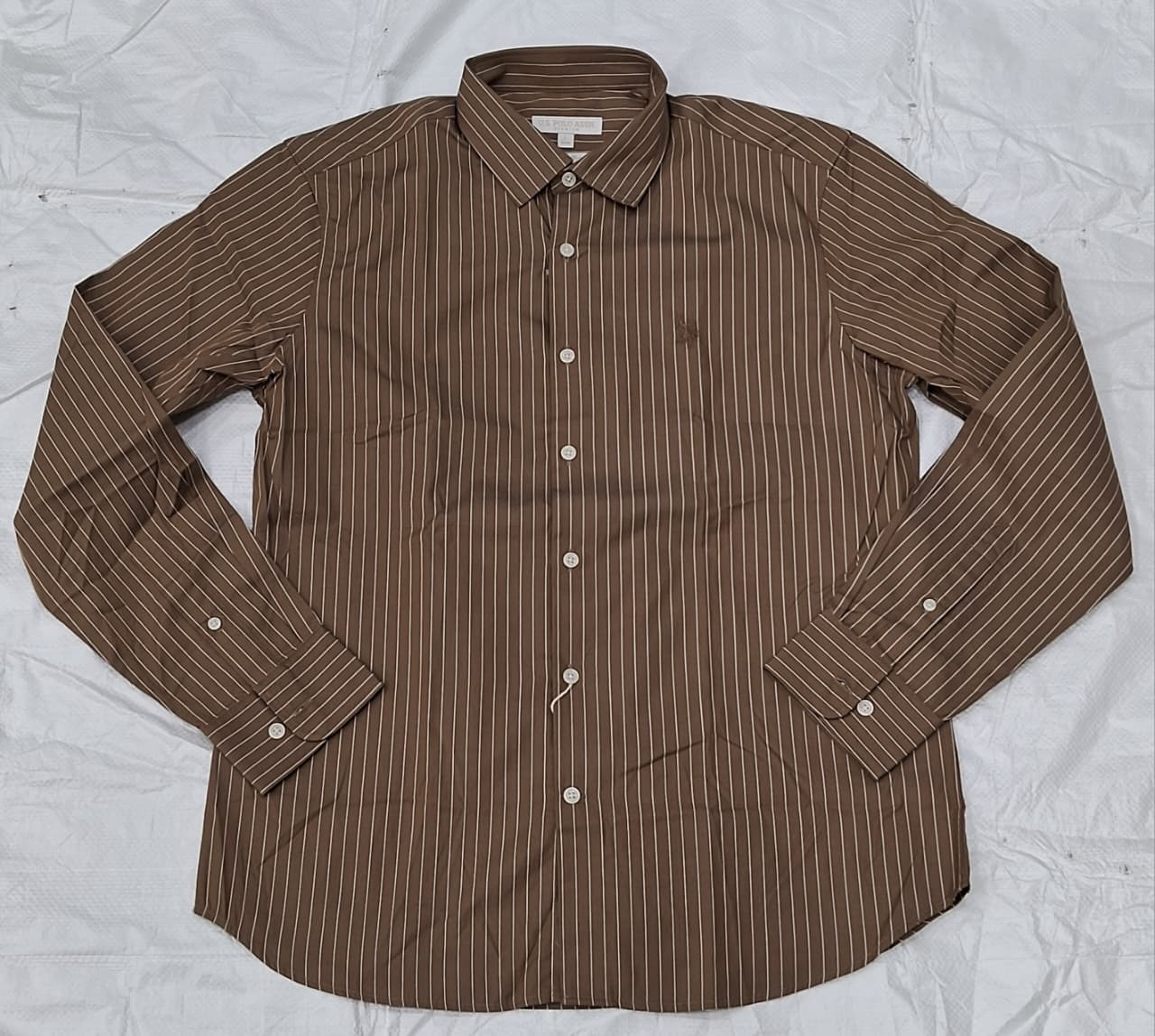
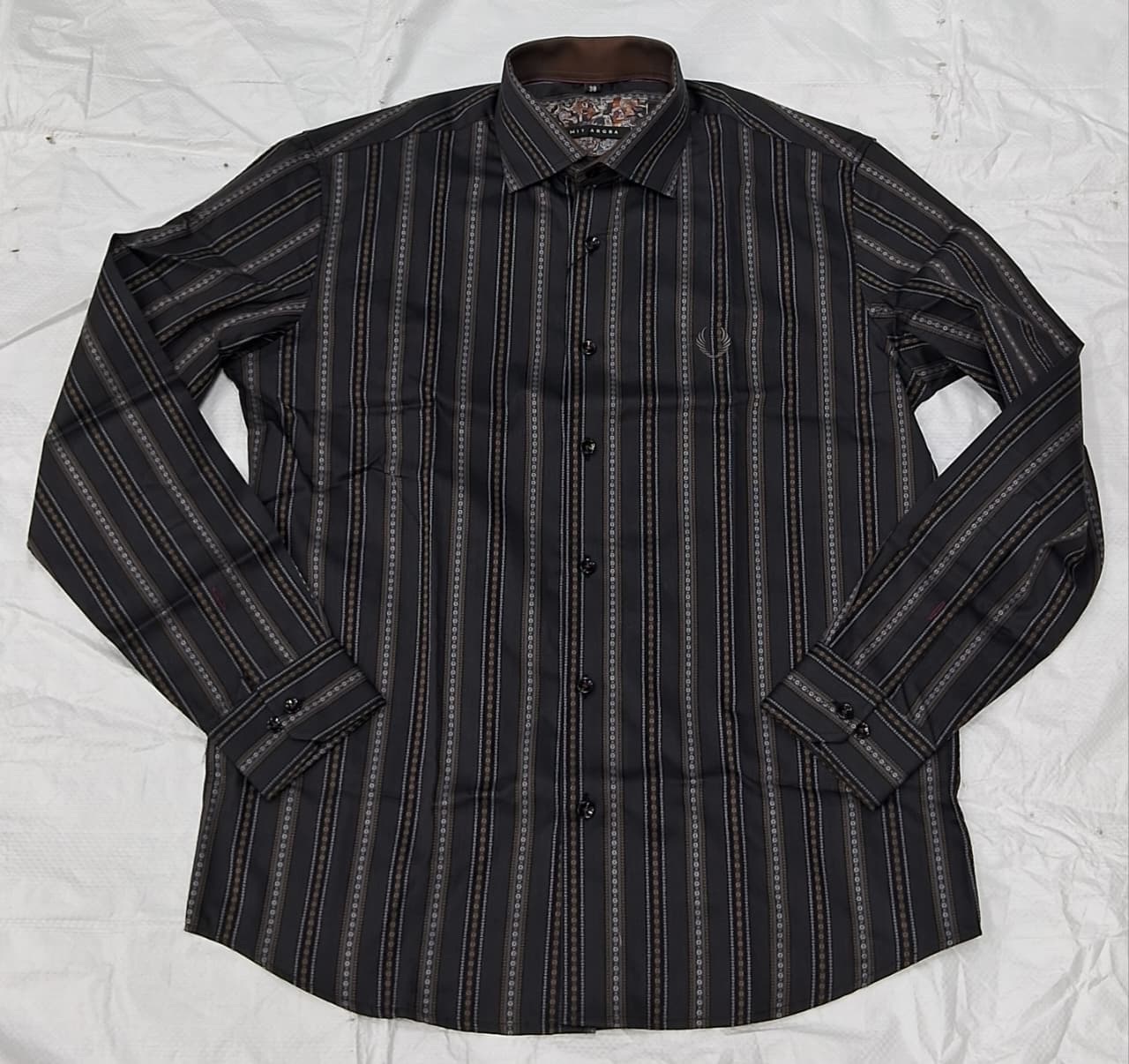
Brown pinstripe formal shirt showing barrel cuffs
Fig. 02.3 — Barrel cuffs in context
Chapter 03

Button plackets

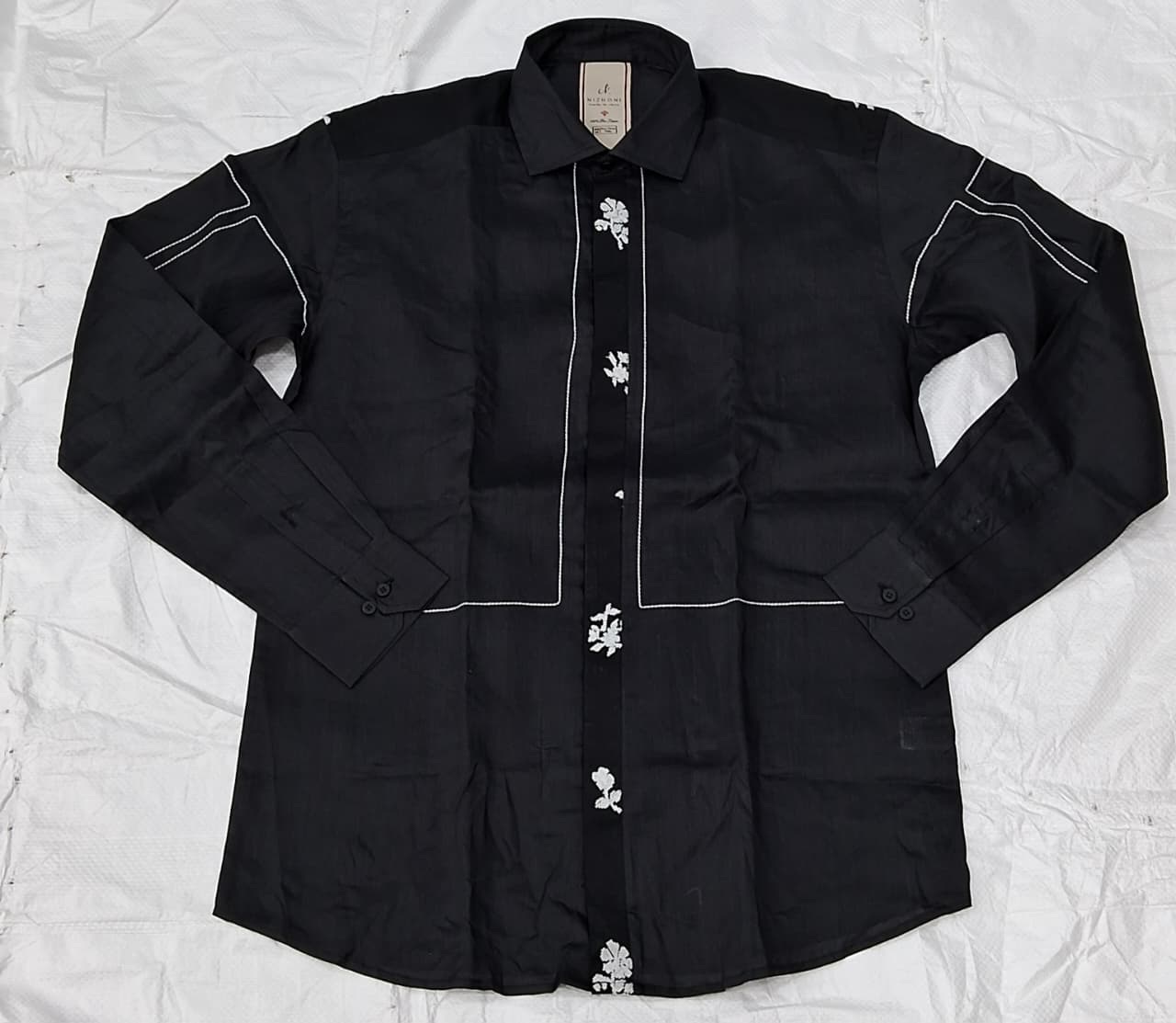
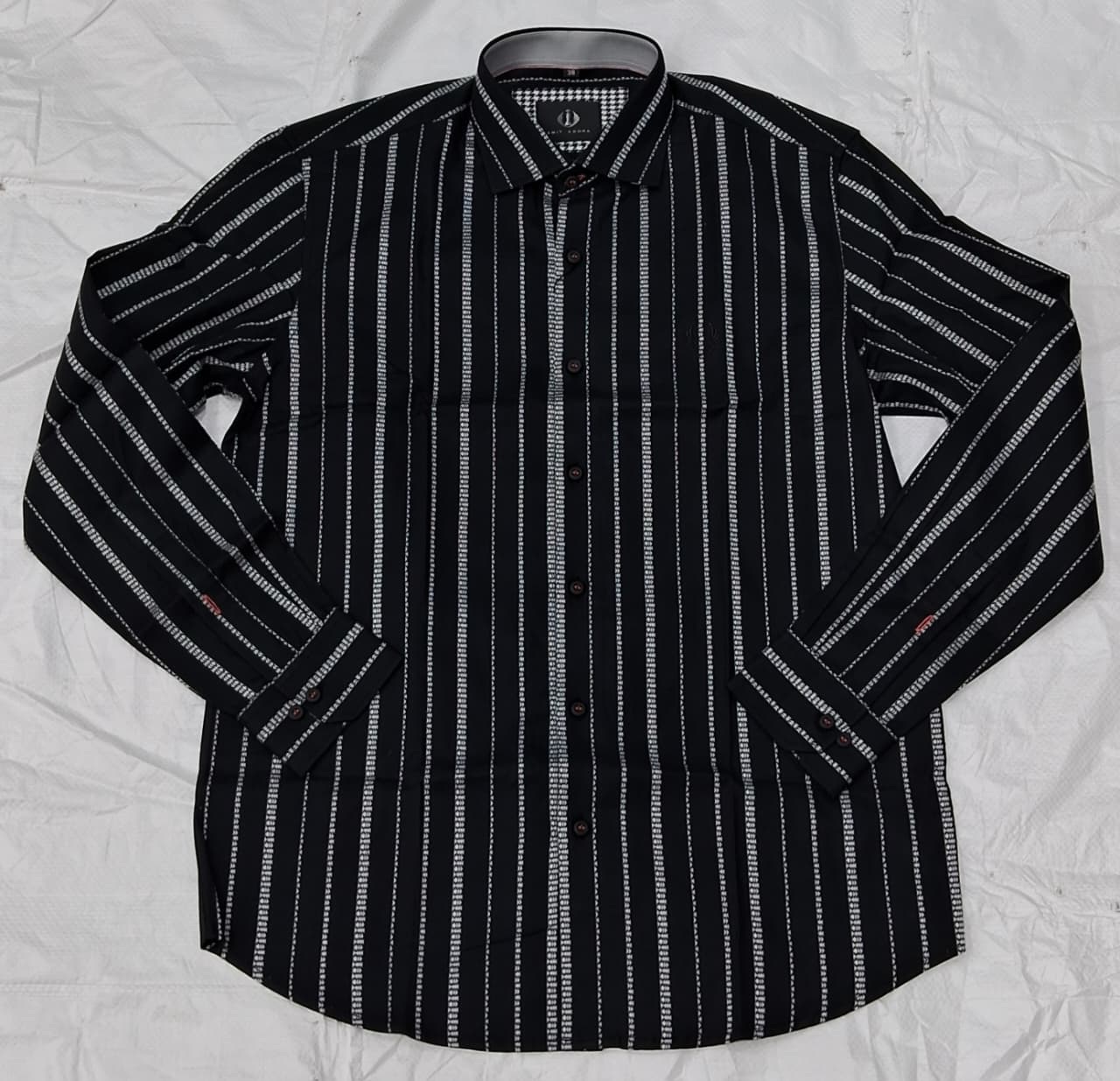
Black shirt with contrast piping along the front placket
Fig. 03.1 — Placket with contrast piping

The placket is the reinforced strip along the front opening that carries the buttons and buttonholes. Beyond its structural role, it defines the vertical axis of the shirt and quietly sets its formality. A contrast piping, as shown, turns the placket into a design statement for occasions beyond the office.

  1. P-1

    Front placket

    A separate band stitched to the front, visible on the surface. Crisp and structured, it is the most common choice for business shirts and gives a strong central line.

  2. P-2

    French front

    The front edge is simply folded under, with no visible band. The result is cleaner and slightly dressier — popular for formal and evening shirts.

  3. P-3

    Concealed placket

    A fly front that hides the buttons beneath a fold of fabric. Minimal and modern, it suits evening dress and contemporary tailoring.

Chapter 04

Shirt patterns

Pattern adds rhythm to a shirt. As a rule, the smaller the pattern and the lower its contrast, the more formal it reads. Larger and bolder patterns move a shirt towards smart-casual. Combine patterns by varying their scale.

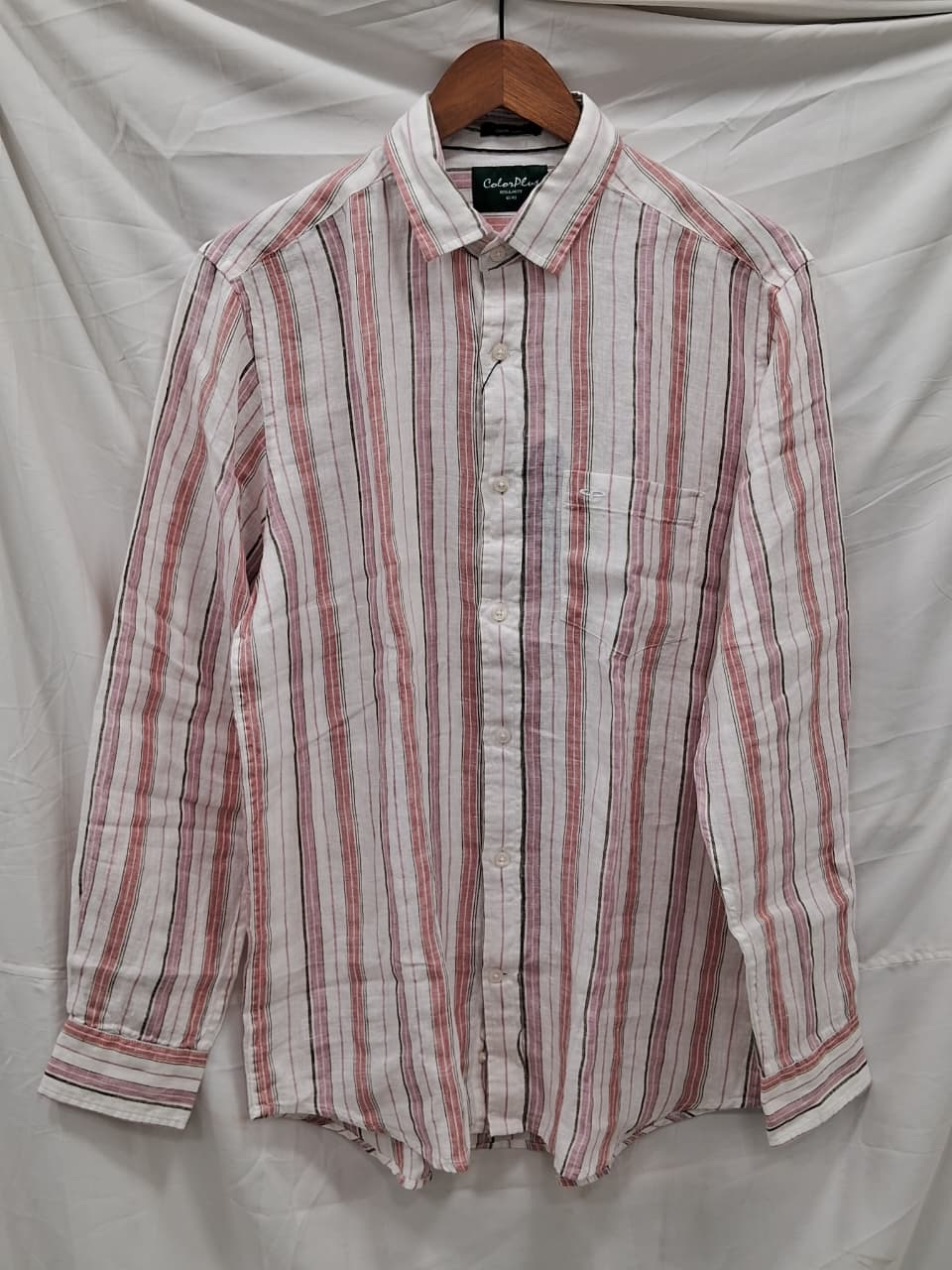
White shirt with red candy stripes on a hanger

Stripes

Pinstripe, hairline, Bengal and candy stripes. Vertical and orderly, from conservative to confident depending on width and colour.

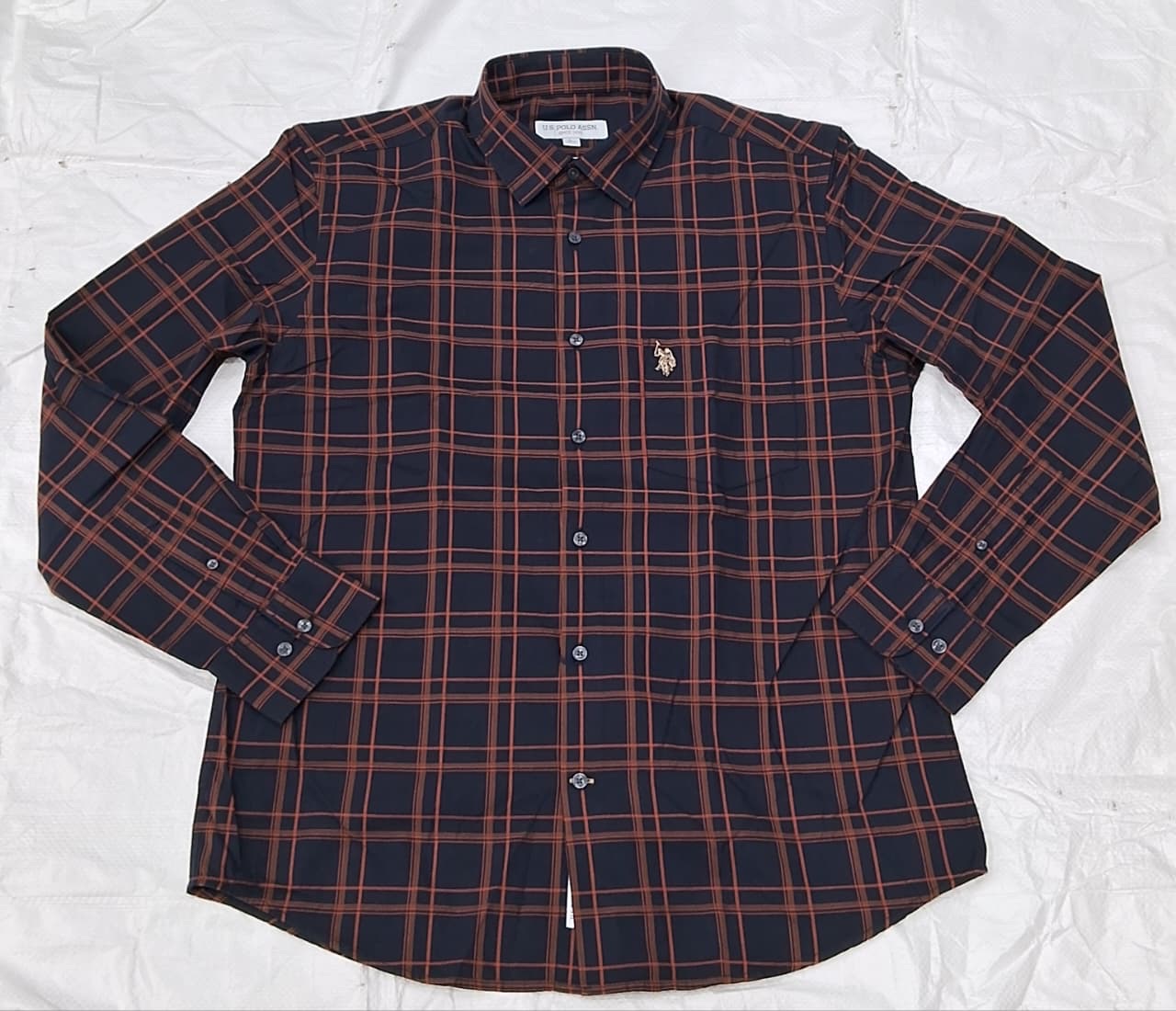
Navy and red check shirt laid flat

Checks

Gingham, micro checks, glen and tattersall. Checks bring texture; keep the scale small for the office.

Blue and white tartan check shirt laid flat

Plaids & windowpanes

Larger, layered grids such as tartan and windowpane. Expressive and best reserved for relaxed days and weekends.

Solids & textures

Plain colours and woven textures such as dobby or herringbone. The most formal family after white.

Micro prints

Tiny repeating motifs that read as texture from a distance — the contemporary office favourite.

Combining patterns

Pair a fine-patterned shirt with a larger-patterned tie, or vice versa. Never match scale exactly.

Chapter 05

Sleeve construction

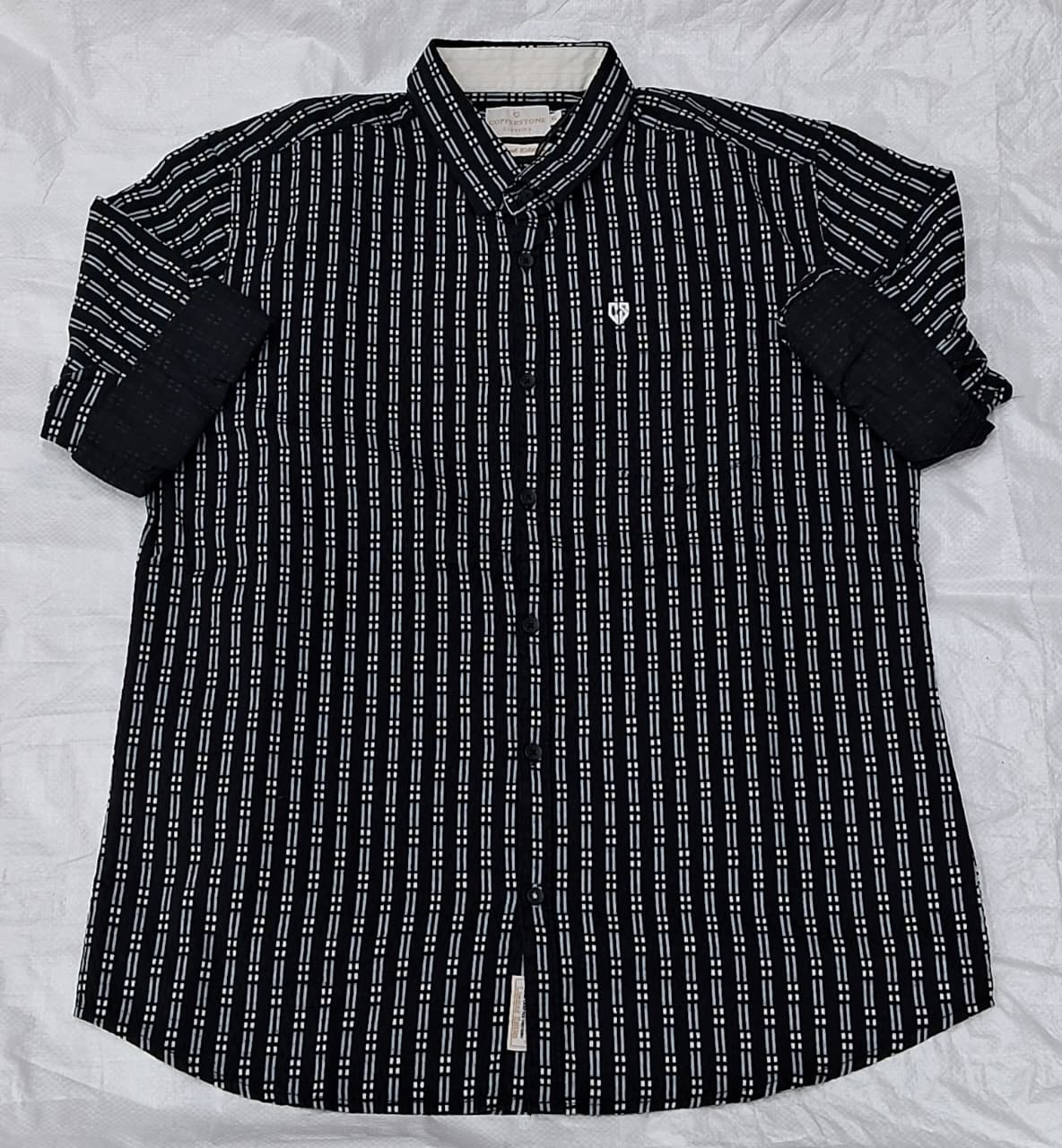
Black striped shirt with sleeves showing contrast roll-up tab and cuff
Fig. 05.1 — Sleeve with contrast turn-up

A shirt sleeve is more engineered than it looks. Its length, width and the way it joins the body determine whether you can raise your arm comfortably and whether the cuff stays at the wrist.

  1. S-1

    Armhole

    A higher, smaller armhole allows the arm to move independently of the body, so the shirt does not pull out of the trousers when you reach.

  2. S-2

    Sleeve head & shoulder seam

    The sleeve is set into the body at the shoulder seam, which should end at the edge of your shoulder bone.

  3. S-3

    Sleeve placket & gauntlet button

    The short opening above the cuff lets it open wide; a small gauntlet button keeps it closed neatly.

  4. S-4

    Pleats at the cuff

    One or two pleats where the sleeve meets the cuff add room for movement while keeping the cuff close at the wrist.

  5. S-5

    Sleeve length

    With arms relaxed, the cuff should reach the base of the thumb — long enough to show beneath a jacket, never covering the hand.

Chapter 06

Formal shirt details

Dark striped shirt with a patterned contrast inner collar
06.1 — Inner collar
Black striped shirt with a contrast inner placket
06.2 — Inner placket
  1. D-1

    Yoke

    The panel across the upper back. A split yoke, cut in two pieces, follows the shoulders more closely.

  2. D-2

    Collar stays

    Slim inserts inside the collar points that keep them straight and sharp throughout the day.

  3. D-3

    Contrast facings

    Patterned fabric inside the collar band or placket — a private detail revealed when the collar is open, as pictured.

  4. D-4

    Side gussets

    Small reinforcing triangles at the base of the side seams that protect the most stressed point of the hem.

  5. D-5

    Buttons

    Thicker, well-anchored buttons sit more securely and look more substantial than thin, loosely sewn ones.

  6. D-6

    Stitching

    Small, even stitches close to the edge create flat seams. It is one of the clearest indicators of careful make.

Continue to Fit & Fabric to see how cut and cloth complete the design, or read Understanding Shirt Collars in the Style Journal.

Design is
in the details.

Every collar, cuff and seam contributes to the line of a formal shirt.

Explore the collections